Who are the Most Hated Poker Players?

Fans name Phil Hellmuth, Tony G, and Mike Matusow first. They are hated the way a TV heel is hated. The cameras need them. Players who lost money name someone else. Russ Hamilton sits at the top of that list, for the UltimateBet cheating scandal. In between are Will Kassouf and Martin Kabrhel. Their talk and tanking have drawn real penalties, including a 2025 World Series ban for Kassouf.
Poker does not have one villain board. It has a room full of people trying to take each other’s money. It has a camera that rewards the loudest reaction. And it has rules that still leave a lot of room for talk.
Put those together and “most hated” splits into three questions.
- Who do fans enjoy disliking?
- Who do other players dread sitting with?
- Who actually broke the game?
A tantrum is not a marked deck. A slowroll on a livestream is not a superuser account. The clips feel similar online. They are not the same thing at the table.
Three kinds of hate:
1. Performance
Phil Hellmuth has spent thirty years losing pots as if the loss were a personal insult. Tony G built a television career out of needling famous players until they played worse. Mike Matusow earned the name The Mouth, then lived inside it.
None of that requires cheating. It requires a microphone and a temper. Sometimes the temper is real. Sometimes it is borrowed for the camera.
2. Conduct
Speech play, long tanks, and angle-shooting are legal until a floor person says they are not. Will Kassouf treats talk as a weapon, and he has said so. Martin Kabrhel treats time as a weapon.
Cheating claims against him have not stuck. Penalties for pace and abuse have.
3. Theft
The third kind is theft. In 2008 and 2009, the Kahnawake Gaming Commission found that 1994 Main Event champion Russ Hamilton was the main person behind a cheating operation on UltimateBet. Some accounts could see opponents’ hole cards. A leaked recording years later caught him admitting he had taken the money.
That is a different category from a brat on day five of a tournament. It belongs on any honest list. It should not be filed under personality.
Fans mix the three because the same clips circulate. A Hellmuth rant, a Kassouf speech, and a suspicious graph all arrive as outrage. Players who have sat in the hands do not mix them. They know which behavior costs a decision, and which behavior costs the pot before the hand starts.
Phil Hellmuth

The default answer. Hated like a character, not like a thief.
Phil Hellmuth knows he is the default answer. He gave himself the nickname. The Poker Brat is not a slur that stuck. It is a brand he renews every summer in Las Vegas, usually after a hand he thinks he should have won.
The record under the brand is not a joke. He holds 17 World Series of Poker bracelets, more than anyone else. The latest came in 2023. He chased an 18th through the 2025 and 2026 Series and did not get it.
That gap is the whole act. A player with that many titles is not supposed to melt down because an amateur called with a hand he dislikes. He does it anyway. Television keeps the clip.
The hand that still defines him
The one that still defines him is from day five of the 2008 Main Event. Hellmuth folded ace-king face up. Cristian Dragomir showed he had called a reraise with ten-four of diamonds. Hellmuth went after him.
The line that survived was “the worst player in history.” He picked up a one-round penalty.
Dragomir’s answer was better than the rant. He was an idiot with a stack. Hellmuth no longer had one. The penalty was later walked back after a meeting with World Series commissioner Jeffrey Pollack. That reversal is part of the resentment. The blowup is content. The penalty is optional.
The complaint under the rant is always the same. Poker contains luck. Luck keeps saving people who played worse than he did. The complaint is true. It is also useless. Everyone at the table is using the same deck.
Other pros have said the quiet part. In 2014, Daniel Colman called it embarrassing to share a profession with him, and went after the sponsorships as well as the tantrums. Tony G has said Hellmuth thinks he is a god on and off the felt. In a 2022 PokerGO heads-up match, Eric Persson told him he would not last a day in a real game, and added a double middle finger for the stream.
Hellmuth remains a broadcast draw. The Series has never needed him to behave in order to invite him back. People pay to watch the meltdown. Dealers absorb the speeches. Amateurs become props in a story about his genius. Very few of them think he is looking at their cards.
Tony G

The purer trash-talker. The lie was the point.
If Hellmuth hates losing, Tony G hates silence. The Lithuanian-Australian, born Antanas Guoga, made his name in the televised cash-game era by talking opponents into mistakes. He enjoyed it enough that the enjoyment became the clip.
The line that outlived the shows came on PokerStars’ The Big Game in 2010. Tony G said he was moving all in blind. Hellmuth called. Tony G turned over ace-king. It was not a blind hand. Hellmuth protested the lie.
Tony G did not blink. “Of course I lied. It’s poker, Phil.”
That sentence is a theory of the game. In a cash game, speech is not testimony. It is a bet with no chips attached. He used the same method on Devilfish, on Ralph Perry, and on whoever sat across from him in partypoker’s Premier League.
He usually aimed at peers, not at nervous amateurs. That is why some players defended him even while they hated the seat. Mocking a novice for folding is bullying. Mocking Phil Hellmuth for believing a sentence is playing the player in front of you.
He has also said he crosses lines. That matters. Trash talk that is a strategy and trash talk that is just contempt feel the same to the target. Tony G was good at both. The cameras did not ask him to separate them.
The later career complicates the villain edit. He served in the European Parliament from 2014 to 2019, then won a seat in Lithuania’s Seimas. He still appears at Triton high-roller tables, calmer than the old version. Live earnings sit above $10 million. The hate stuck to the younger footage. Poker kept the footage.
Mike Matusow
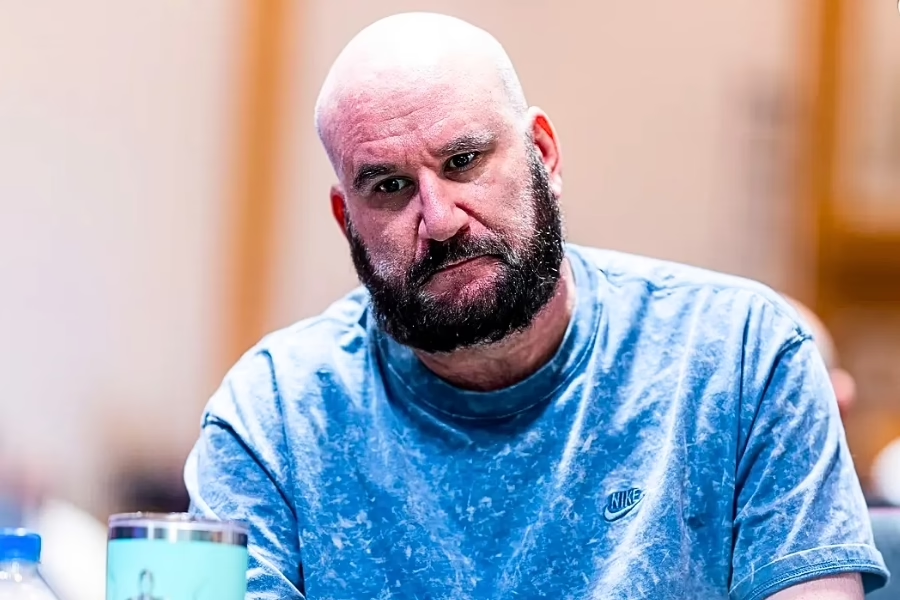
The Mouth. Less a plan than a man who cannot stop.
Mike Matusow is the third name on every trash-talk list. He is also the one who least resembles a strategy. Hellmuth performs injury. Tony G performs contempt. Matusow often looks like a man who has already lost the argument with himself.
He has four World Series bracelets. The nickname arrived with the boom. The 2004 Main Event gave it a permanent clip. He leaned toward eventual champion Greg Raymer and told him, in short, that he had big ones and Raymer had little ones, and that Raymer should stop messing with him.
A few hands later Matusow was out, crying on Hellmuth’s shoulder. Raymer’s later summary was simple. He did not like Mike. The feud lasted years.
The book that followed, Check-Raising the Devil, was not a heel memoir. It was an account of addiction, depression, and the kind of swing that empties an account and then keeps going. Friends in the game have described stepping in when the losses ran.
Daniel Negreanu has defended him in one season and written him off in another. In 2016 he talked about a “fried brain” from years of drug abuse. By 2020 the public fights had moved from bad beats to conspiracy posts.
That is why Matusow is hard to file. He can be genuinely difficult to play with, celebrating too long, talking too much, and pushing things far enough to earn penalties, including one for excessive celebration at the 2014 Series. Yet there is more to his reputation than bad behavior.
Some of his worst moments seem less like calculated villainy and more like symptoms of a personality that struggles to stay in check. The table does not owe him that distinction. It does explain why the hate around him has always been mixed with worry.
Will Kassouf
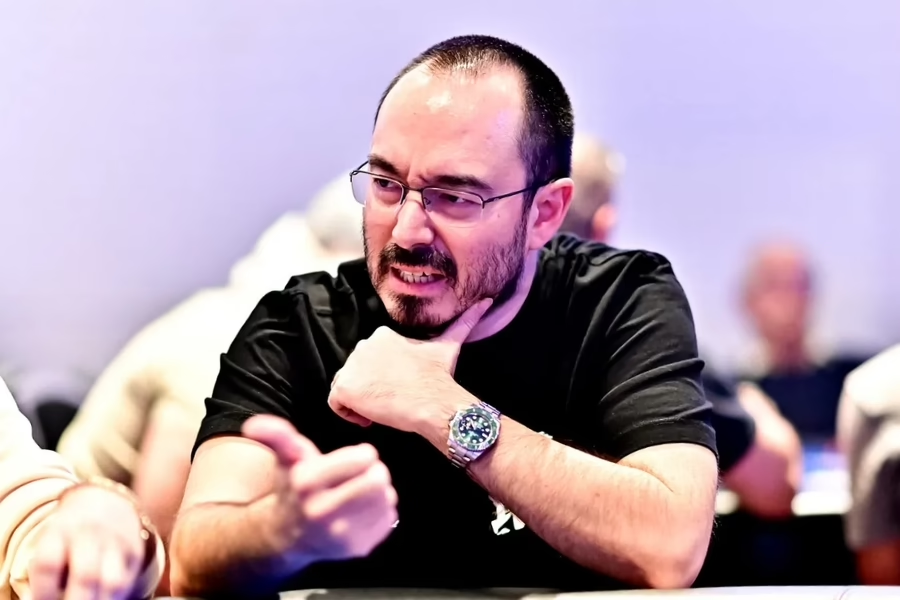
Where annoying becomes a rules problem.
Kassouf is the point where the floor gets involved. The British pro treats table talk as the skill, not as a side effect of the skill. He has said the point is to get into an opponent’s head. Convince them you have it when you do not. Convince them you do not when you do.
The 2016 Main Event made him famous for it. With 17 players left, he three-bet Griffin Benger, then talked through the decision. One line asked how many miles it was to Hollywood. It was meant to needle Benger for taking time. Benger called it verbal abuse from across the table.
Kassouf had kings. Benger had aces and snapped him off. Kassouf finished 17th for $338,288, his first World Series cash. He left saying he had played his best game. Benger later allowed that the reaction itself was evidence the act could work.
Nine years later the same act met a different floor. In the 2025 Main Event, Kassouf drew repeated clock calls. He was penalized for calling another player a prick. Staff put him on his own shot clock, at one point ten seconds to act, to kill the speech. He confronted tournament director Jack Effel.
He busted in the low thirties, for a payout reported around $300,000. On the way out he told the remaining players he would remember their faces. Security walked him off the floor. Tournament director Dennis Jones then banned him from the rest of the 2025 Series.
His defense is the Tony G defense, updated for livestreams. The antics, he has argued, bring viewers. Speech play is deception, and deception is the game. The 2025 ruling is the counterargument in procedural form. Talk that slows the tournament, insults an opponent, and continues after warnings is no longer a read. It is a pace problem with a name on it.
Whether a rest-of-series ban was too harsh is a fair argument. Whether he had been warned is not.
Martin Kabrhel

Time as a weapon. A cheating claim that did not stick.
Martin Kabrhel sits in the next seat, with a thicker résumé and a worse reputation among high-stakes regulars. The Czech pro has five World Series bracelets and live earnings around $19 million. He also has a shot-clock problem that follows him from event to event.
The serious accusation came at the 2023 Series, in the $250,000 Super High Roller. Andrew Robl said Kabrhel was marking cards. Chance Kornuth, Dan Smith, and Justin Bonomo were among the players who took the claim seriously enough to say so. The World Series investigated. It said it found no evidence. Kabrhel denied it and talked about a defamation suit.
That outcome has to stay in the sentence. An unproved cheating claim is not a finding. Treating it as one is how poker rumors become fake history.
What did not need an investigation was the tanking and the talk. Through the 2025 Series, opponents showed up in earplugs. He drew penalties and a dedicated clock. During the 2026 Series, Daniel Negreanu said he would have banned him years ago. Kabrhel won a 2025 Mini Main Event bracelet anyway.
The results are why the complaints never quite end the career. A player who keeps final-tabling is expensive to remove. The floor would rather issue a clock than a lifetime ban for being unpleasant.
An October 2025 hand on Hustler Casino Live was the internet’s verdict in miniature. In a pot of about $400,000, Nik Airball slowrolled a winning hand, then said he thought he had ace-high. He added that Kabrhel had said he liked slowrolls. A lot of the audience treated the slowroll as justice.
That reaction is the tell. Kabrhel is hated less for any single pot than for the feeling that every pot with him will take longer than the rules intended.
The other list
Hate that has nothing to do with table manners.
Russ Hamilton
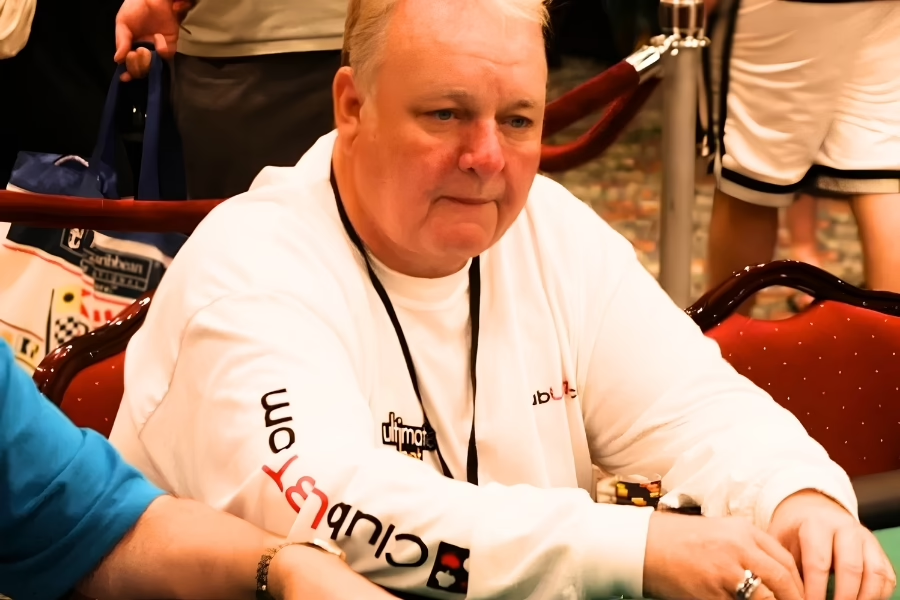
Russ Hamilton is the cleanest case. He won the 1994 Main Event. He was also, on the Kahnawake Gaming Commission’s findings, the main person responsible for the UltimateBet superuser scheme. Accounts linked to the operation could see opponents’ hole cards.
The commission tied most of the devices, IP addresses, and money flows to Hamilton. It ordered the site to repay about $22 million. Estimates of the total taken run higher if Absolute Poker’s related scandal is counted with it. Some put the combined figure past $50 million.
Hamilton was never criminally charged. In a 2013 leaked recording he was heard admitting he had taken between $16 million and $18 million, and saying he was not trying to make it right. Victims included working pros. Matusow has said he sent large sums to Hamilton to play on the site, including money from his own scores, and watched it go to an account that could see his cards.
That is the opposite of a bad beat. The deck was not the problem. The software was.
Mike Postle
Mike Postle belongs in the next paragraph, with a harder caveat. In 2019, Veronica Brill and Joey Ingram led a public review of Postle’s results on the Stones Gambling Hall livestream. The win rate, the timing, and individual hands convinced much of the poker internet that he had hole-card information. Postle denied it. Stones stopped the stream.
Civil cases did not produce a court finding that he cheated. He was not charged. The hatred stuck anyway, because the hands were on video and the explanation never satisfied the people who reviewed them.
Writing “Postle cheated” as settled fact overclaims the record. Leaving his name out pretends the record is not there.
Jamie Gold
Jamie Gold is a shorter, older entry, and it is mostly not about cheating. He won the 2006 Main Event for $12 million. A fight over a backing deal then froze about $6 million of the prize before a settlement. He also told The New York Times he had exposed a hole card and told an opponent his hand during the win. Both break tournament rules.
The Series reviewed the tape, called the incidents exuberance rather than a plan, and declined a retroactive penalty. The bracelet later turned up at auction after Gold had parted with it. He is not Hamilton. He is a reminder that a Main Event win can make a player disliked for the aftermath alone.
The rest of the cast
A few other names come up often. They are worth placing so the main list does not have to carry them.
Eric Persson
Eric Persson, the Maverick Gaming founder, is disliked in the high-stakes stream world for playing huge pots with the confidence of a man who owns the building. The 2022 Hellmuth match is the exhibit. He is abrasive. He is also putting his own money in the middle.
Shaun Deeb
Shaun Deeb is a modern antagonist, not a cartoon. Eight bracelets and the 2025 World Series Player of the Year award sit next to public feuds, including clashes with Sean Perry and with Hellmuth. People who dislike him tend to dislike the needling, and the willingness to argue a debt in public. That is a different temperature from a ban.
Nik Airball
Nik Airball, Nikhil Arcot, is a Hustler Casino Live regular whose job on camera often looks like agitation. The Kabrhel slowroll made him briefly popular with people who cannot stand Kabrhel. On a livestream, hate is not always a cost. Sometimes it is the booking.
The Older Antagonists
Further back, Scotty Nguyen’s “baby” routine and Humberto Brenes’ singing-shark act annoyed entire final tables without becoming scandals. Sam Grizzle and Hellmuth feuded for years in a way older fans still mention. Shawn Sheikhan picked fights with Matusow that made Matusow look like the reasonable one.
None of them redefined the list. They explain why it is never short.
How to Read the Names
| Player | Why they’re hated |
| Phil Hellmuth, Tony G, Mike Matusow | Hated as characters. The show needs the noise. |
| Will Kassouf, Martin Kabrhel | Hated as table problems. The floor has a file. |
| Russ Hamilton | Hated for the money. |
| Mike Postle | Sits beside Hamilton as an accusation, not a verdict. |
Why poker keeps making them
Poker is one of the few games where talking to your opponent during the point is part of the sport. Golf does not work this way. Chess does not work this way. A hold’em hand can include a speech, a stare, a false tell, and a complaint to the dealer.
The rules step in only when the speech becomes advice on someone else’s hand, a stall, or abuse. Until then, talk is legal. That gap is where the hated player lives.
Television narrowed the incentive. Boom-era shows learned that a quiet, correct fold does not hold an audience. Hellmuth explaining why the universe had wronged him does. Sponsorships followed the audience. Once a rant is a renewable asset, asking the ranter to stop is a request to shrink his own business.
Kassouf saying the antics bring viewers is not a delusion. It is a description of the market that paid for the table.
Live poker has a second market the cameras miss. In a cash game, an annoying regular becomes a tax on everyone else’s session, slowing the orbit, starting arguments, and daring the floor to act in a room that would rather keep the rake. In a tournament, every delay eats into a level.
That helps explain why shot clocks spread and why individual clocks became a modern penalty, including for Kassouf in 2025 and Kabrhel on multiple occasions. Rather than judging personality, the clock puts a price on wasted time.
Cheating scandals sit outside that market. That is why they curdle into something harder than dislike. A superuser account is not content. It is a broken game. After UltimateBet, and again after the Postle argument, a hot run on camera is a graph someone will check.
So who tops the list?
If the question is who fans most enjoy disliking, the answer is still Phil Hellmuth. He has the bracelets, the catchphrases, the decades of footage, and a personality that renews the complaint every summer. Tony G is the cleaner trash-talker. Matusow is the one whose volume came with a cost he could not always pay. Kassouf and Kabrhel are the current version of the problem, updated for shot clocks and social clips.
If the question is who did the most damage to other players’ money, Hamilton stands alone on the proven list. A Main Event champion with access to hole cards is not a heel. He is the reason a generation of online players stopped trusting the software. Postle is the unresolved sequel: accused in public, denied in public, never cleared the way the audience wanted, never convicted the way a careful sentence requires.
The mistake is to want a single winner. Poker’s most hated player depends on what you think the game owes you. A viewer wants a villain. A floor person wants a clock. A player who sent a roll to a site that could see his cards wants the money back, and a name on the account that took it.
The room will keep supplying all three. Talk is still legal. Cameras still pay for the blowup. And every few years a graph shows up that does not look like variance. The hate that follows is not always fair. It is rarely about nothing.


