What are the Best Starting Hands in Poker

Every Texas Hold’em hand begins the same way: two cards face down. Those two cards decide whether you should fight for the pot or throw them away. Get this decision right and you immediately play fewer losing hands. Get it wrong and you leak chips before the flop even lands.
There are 1,326 possible two-card combinations and 169 unique starting-hand types. Only a small slice of them are truly strong. This guide ranks the best starting hands, explains why they win, and shows how position changes which ones you should play.

Some thoughts about Poker starting hands. | by Nicholas Rios | Medium
How Starting Hands Are Ranked
Players usually rank hole cards in two ways:
- Raw equity — how often the hand wins if all money goes in before the flop against a random hand.
- Playability and expected value (EV) — how well the hand performs in real pots: flush potential, domination, blocker value, and how easy it is to play after the flop.
Pocket pairs often look stronger on a raw-equity list. Big suited cards like Ace-King suited often rank higher once you factor in flushes, nut kickers, and how often you can continue betting.
A useful shorthand:
- s = suited (same suit)
- o = offsuit (different suits)
- Pairs sit on the diagonal of a starting-hand chart (AA, KK, QQ…)
Pocket aces are dealt about once every 221 hands. Any pocket pair is about 1 in 17. Premium hands are rare, which is why discipline matters more than heroics.
The Top Starting Hands (Ranked)
These are the consensus elite holdings for No-Limit Hold’em. Equities below are approximate heads-up win rates versus a random hand.
| Rank | Hand | Nickname | Equity vs random | Why it ranks here |
|---|---|---|---|---|
| 1 | AA | Pocket Rockets / Bullets | ~85% | Best hand in the game. Dominates everything preflop. |
| 2 | KK | Cowboys | ~82% | Loses mainly to AA. Crush almost every other holding. |
| 3 | Ladies | ~80% | Still a huge favorite. Trouble starts when an Ace or King hits. | |
| 4 | AKs | Big Slick (suited) | ~67% | Best unpaired hand. Nut flush + best kicker + blockers. |
| 5 | JJ | Fishhooks | ~77.5% | Strong pair, but overcards on the flop make it the most misplayed premium. |
| 6 | AKo | Big Slick (offsuit) | ~65% | Same high-card power as AKs, slightly less flush equity. |
| 7 | AQs | — | ~66% | Top Broadway suited hand. Nut-flush potential. |
| 8 | TT | Dimes | ~75% | Solid pair. Best when you keep the pot heads-up. |
| 9 | AJs | — | ~65% | Strong ace with flush and Broadway straight potential. |
| 10 | KQs | — | ~63% | Connected Broadway. Plays well multiway. |
A few rankings flip depending on the metric. JJ has more raw equity than AKs against a random hand, but AKs often produces more money in real games because it makes the nuts more often and blocks AA and KK.
Premium Hands: Always Play These
AA, KK, QQ, AKs (and usually JJ and AKo) are premium.
Default plan:
- Raise from any seat — early position, blinds, it does not matter.
- Re-raise when someone has already opened.
- Be willing to put a lot of chips in before the flop with AA, KK, and AKs.
Pocket Aces. Raise. Do not limp. Slow-playing AA and letting five players see a cheap flop is one of the fastest ways to turn the best starting hand into a losing one. Multiway pots give opponents more ways to flop straights and flushes.
Pocket Kings. Second-best hand. The main danger is an Ace on the flop when a tight player is still betting. Preflop, treat KK like a monster.
Ace-King suited. You do not have a made hand yet. You have the best draw to a made hand: top pair with the best kicker, the nut flush, and strong straight potential. Play it aggressively preflop. After the flop, do not treat a missed AK like a pair of aces.
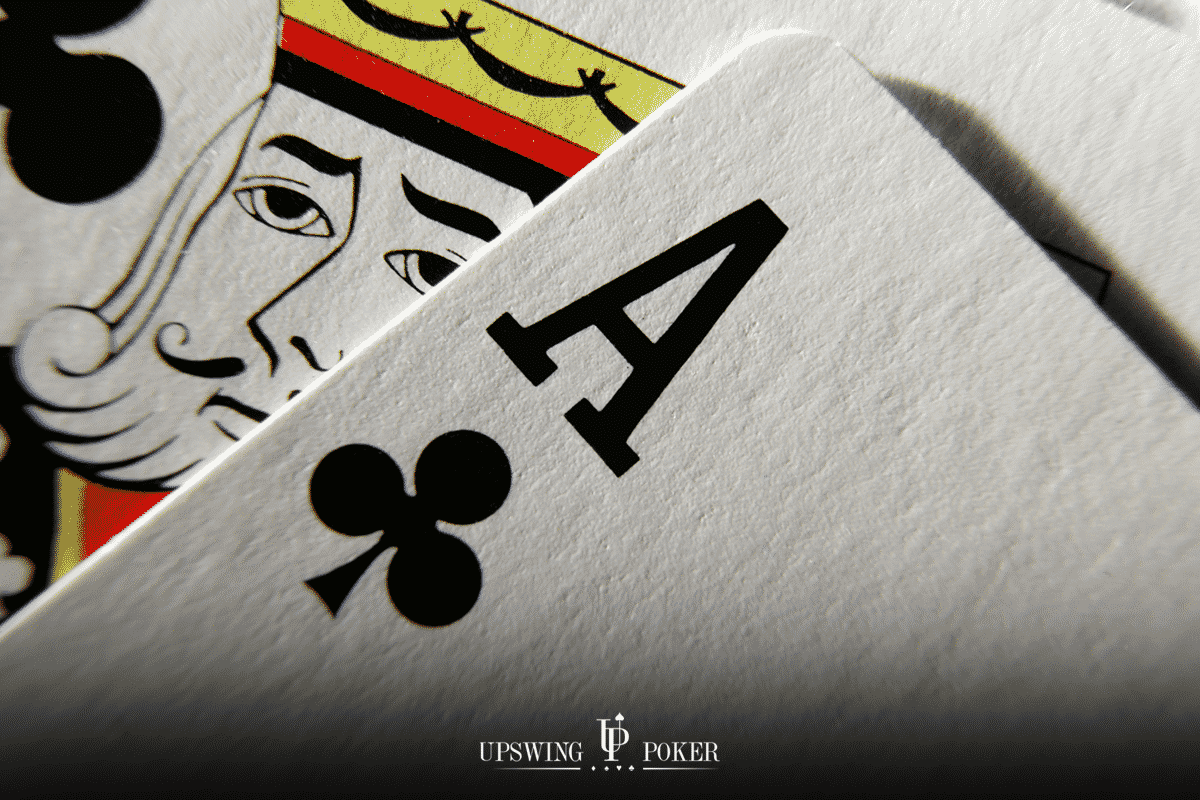
How to Play Ace-King (Big Slick) in Cash Games – Upswing Poker
Strong and Playable Hands
Just below premium:
- Pairs: TT, 99, 88
- Suited Broadway: AQs, AJs, ATs, KQs, KJs, QJs
- Offsuit Broadway: AKo, AQo
These are profitable opens from most seats. From early position you should be tighter. From the cutoff and button you can open them freely and sometimes 3-bet.
Pocket Jacks and Tens look beautiful until an overcard lands. Against a tight player’s 3-bet, they are not automatic all-in hands. Against a loose open, they are still raises.
Suited aces (A9s–A2s) pick up extra value from nut-flush potential. A5s also makes the wheel. These are much better in position and with deeper stacks.
Speculative Hands (Position Matters)
These hands win big when they hit and lose small when they miss:
- Small pairs: 77–22 (set-mining)
- Suited connectors: JTs, T9s, 98s, 87s, 76s, 65s
- Suited gappers and weaker suited aces
You play them for implied odds: cheap flop, huge payoff if you flop a set, flush, or straight. They lose value when stacks are short or when you are out of position against a raise.
The worst common starting hand is 72 offsuit. No pair potential worth mentioning, no flush, no straight. Fold it.
This profitability heatmap from a large sample of real hands shows the same pattern: high pairs and big suited cards print money; disconnected offsuit junk bleeds it.

Profitability of poker hole cards, 120,000 hand sample. [OC] : r/dataisbeautiful
Position Changes Everything
The same hand is not equally good from every seat.
- Under the Gun (early): Tightest range. Mostly AA–TT, AKs, AQs, AKo, and a few other strong suited broadways. Too many players act after you.
- Middle position: Add 99–88, AJs, KQs, ATs.
- Cutoff / Button: Widest range. Small pairs, suited connectors, more suited aces, and some offsuit Broadway become profitable because you act last after the flop.
- Small Blind: You will be out of position for the rest of the hand. Tighten up compared with the button.
- Big Blind: You already have money in the pot, so you can defend wider — but calling every suited junk hand is still a leak.
A simple rule: the earlier you act, the stronger your cards need to be.
Common Mistakes With Strong Starting Hands
- Slow-playing AA and KK too often. Isolation is usually better than a trap.
- Treating JJ/TT like AA. Overcards change the hand. You can still win; you just cannot stack off blindly.
- Overvaluing offsuit Ace- rag. A7o looks pretty and loses a fortune to better aces.
- Calling 3-bets out of position with medium pairs without a plan to fold when you miss the set.
- Playing too many hands from early position because they “look connected.”
Starting-hand selection is not the whole game. Postflop skill, bet sizing, and reading ranges matter more as you improve. But folding the bottom 75–80% of hands from early position is the fastest way for a new player to stop donating.
Quick Reference
Always raise: AA, KK, QQ, AKs
Raise from almost any seat: JJ, TT, AKo, AQs, AJs
Position-dependent: 99–22, KQs–JTs, suited aces, suited connectors
Usually fold: Weak offsuit aces, unconnected offsuit cards, 72o and friends
Pocket aces will still lose sometimes. That is poker. The goal is not to win every pot with AA. The goal is to start with the hands that win enough pots, for enough money, that the math works in your favor over thousands of hands.
Play the premiums fast. Play the speculative hands cheap and in position. Fold the rest. That is the whole starting-hand game in one paragraph.


