What Is Rabbit Hunting in Poker?

Rabbit hunting is one of those quirky poker customs that sits somewhere between curiosity and self-torture. After a hand ends without all five community cards being shown—usually because everyone folded—a player asks the dealer to reveal the remaining cards anyway.
Nothing changes. The pot is already awarded. Yet the urge to peek at “what would have happened” is strong enough that the practice has its own name, its own debates, and its own set of house rules.
In this guide we’ll cover exactly what rabbit hunting is, where the term comes from, how it works (and doesn’t work) in live and online poker, the arguments for and against it, and how it differs from running it twice or simply running out the board in an all-in pot.
What Is Rabbit Hunting?
Rabbit hunting (also called a “rabbit hunt” or occasionally a “fox hunt”) is the act of revealing the community cards that would have been dealt if a hand had continued after one or more players folded.
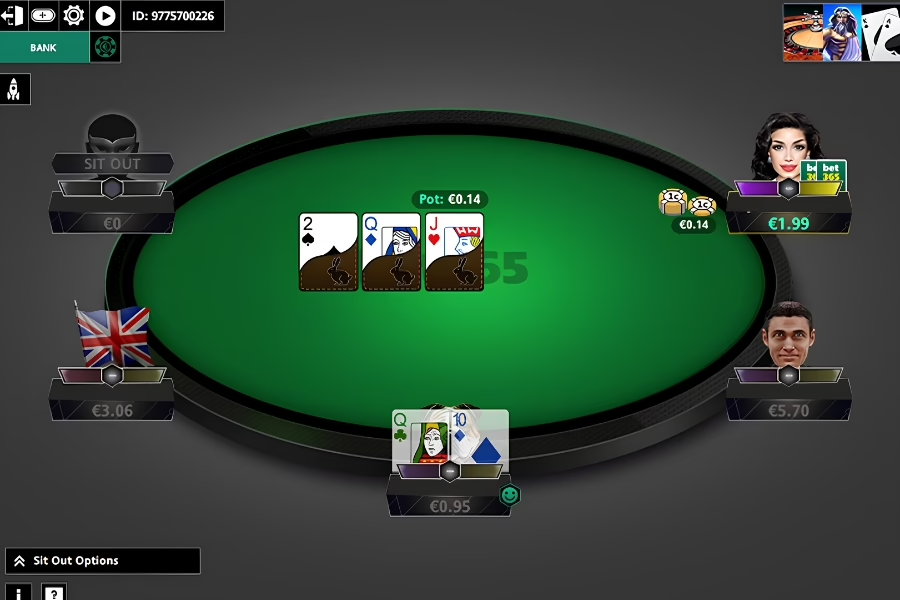
In Texas Hold’em, the board is built in stages: three cards on the flop, one on the turn, and one on the river. When action ends before the river (or even before the flop), those remaining cards stay in the deck. A rabbit hunt pulls them out after the hand is over so everyone can see them.

The only purpose is curiosity.
A Simple Example
You’re on the turn with a flush draw and face a large bet. You fold. The other player shows nothing and takes the pot.
You turn to the dealer and ask, “Can we rabbit the river?”
The dealer burns a card and turns the river. It’s the flush card. You groan. Your opponent smiles. The next hand is dealt. Nothing about the previous pot has changed.
Where Does the Term Come From?
The exact origin is fuzzy, but the most common explanation ties it to actual rabbit hunting. Rabbits hide in burrows and are hard to find; the remaining cards are also “hidden,” and hunting them down after the hand feels similar.
Another theory simply links it to the idea of chasing something elusive just for the sake of the chase. You’ll also hear “fox hunt” used interchangeably in some rooms. Both terms convey the same idea: going after something that no longer matters to the outcome.
How Rabbit Hunting Works in Practice
In Live Poker
In live games, rabbit hunting is never a right—it’s a request.
A player asks the dealer (or the table) to run out the remaining cards. The dealer may ask if anyone objects. If the table is casual and the winner doesn’t mind, the dealer burns and turns the cards.
In many card rooms and casinos, however, dealers are instructed to refuse. The reasons are practical: it slows the game, can create arguments, and occasionally leads to information leakage through reactions.
House rules vary widely. Some rooms allow it only if every remaining player agrees. Others ban it entirely in both cash games and tournaments. Always check the local rules before asking.
Why Players Rabbit Hunt (and Why Many Don’t)
Players request a rabbit hunt for a few common reasons:
| Why players do it | Why others avoid it |
|---|---|
| Curiosity about whether a draw would have hit. | It slows the game, especially when multiple players request it. |
| Emotional closure—confirming that a fold was correct (or discovering it wasn’t). | Seeing a card you needed can tilt you more than never knowing. |
| Learning or reviewing a decision after the fact. | Reactions (or lack of them) can leak information about the hands people folded. |
| Entertainment in a social or home game. | Repeatedly seeing remaining cards gives a tiny bit of information about the deck’s composition, though this is rarely exploitable in practice. |
Rules, Etiquette, and House Policies
Because rabbit hunting is not part of the official rules of poker, every room sets its own policy. Common approaches include:
- Completely banned in both cash games and tournaments.
- Allowed only if the winner of the pot agrees and no one else objects.
- Permitted in casual cash games but forbidden in tournaments.
- Discouraged by the floor staff even if not formally banned.
Good etiquette is simple: ask once, accept “no” without argument, and don’t make it a habit. In a fast, serious game, repeated requests for rabbit hunts will annoy both the dealer and the other players.
Does Rabbit Hunting Help Your Game?
From a pure strategy standpoint, almost never.
The deck is shuffled before the next hand, so the specific cards that would have come have no predictive value.
Seeing them can occasionally confirm that a fold was correct (or incorrect), which may feel useful for emotional control, but it can just as easily create regret or tilt.
Some players claim that watching reactions during a rabbit hunt gives free information about opponents’ ranges. In theory this is true—if someone grimaces when a particular card hits, you learn something. In practice, good players control their reactions, and the information is usually too vague to matter.
Most winning players treat rabbit hunting as optional entertainment at best and a distraction at worst. If the room allows it and you genuinely want the closure, do it sparingly. If the room discourages it, skip the request and move on.
Conclusion
Rabbit hunting is a small, human moment in a game that is otherwise ruthlessly mathematical. It lets players satisfy the universal desire to know what might have been, even when that knowledge has no strategic value.
In home games and relaxed cash games it can be harmless fun. In most casinos, tournaments, and online rooms it is restricted or banned for good reasons—speed, focus, and the avoidance of unnecessary tilt.
If you ever feel the urge to ask “what would have come?”, remember that the next hand is the only one that matters. The rabbit is already gone. The best move is usually to let it stay that way and deal the next hand.