What Is a Flop in Poker?
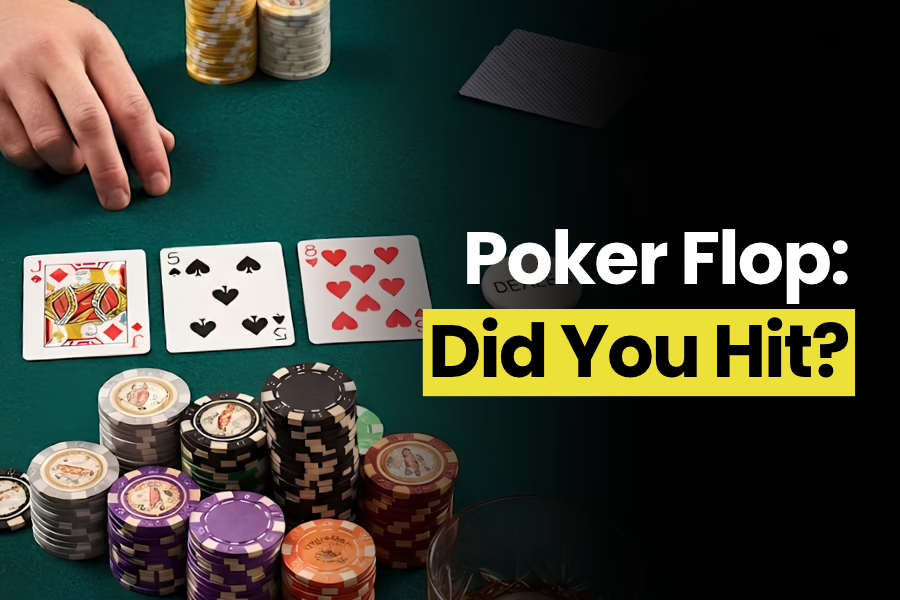
The flop is one of the most important moments in any game of Texas Hold’em or Omaha. It is the first time three community cards appear in the middle of the table, and it instantly changes the strength of every player’s hand.
Before the flop you only know your two (or four) hole cards. After the flop you suddenly have a much clearer picture of whether you are ahead, behind, or drawing to something strong.
Understanding what the flop is, how it is dealt, and how to think about the cards that appear will improve your decision-making on every street that follows. This guide covers the definition, the history of the term, the mechanics of the deal, board textures, and practical strategy advice you can use at the table.
What Exactly Is the Flop?
In community-card poker games such as Texas Hold’em and Omaha, the flop is the first three community cards dealt face-up in the center of the table.
These cards are shared by every player still in the hand. Each player combines the community cards with their private hole cards to form the best five-card poker hand.
The flop is dealt after the pre-flop betting round ends and before the turn and river cards. It is followed immediately by its own round of betting.
Because three cards appear at once, the flop reveals a large amount of information very quickly.
In Texas Hold’em, the three flop cards plus your two hole cards mean you have already seen five of the seven cards that will make up your final hand (roughly 71 percent of the information).
Why Is It Called the Flop?
No one knows the exact origin of the word, but the most widely accepted explanation is that it comes from the sound the three cards make when they are dealt onto the table.
When a dealer spreads or turns three cards face-up together, they often make a soft “flop” noise as they land.
The term became standard as Texas Hold’em rose in popularity in Las Vegas in the 1960s and 1970s. Community-card games are sometimes called “flop games” for this reason.
Games without community cards, such as Stud or Draw poker, do not have a flop.
How the Flop Is Dealt
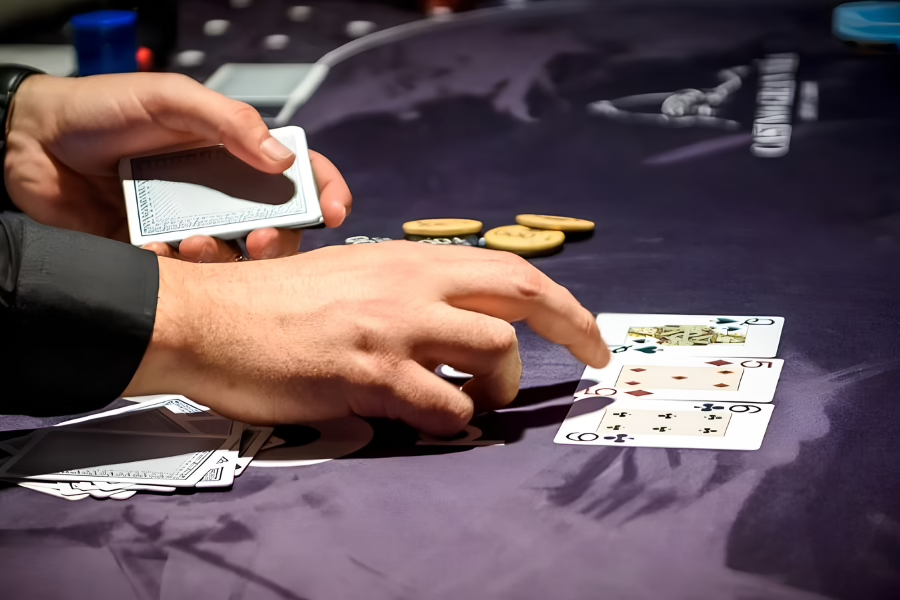
After the pre-flop betting round is complete (or if there is no betting because everyone checked or folded to the big blind), the dealer burns one card and then deals the flop.
Burning a card means the dealer discards one card face-down without showing it. This is done for fairness and to prevent players from seeing the next card in the deck if a card is accidentally exposed.
The three flop cards are traditionally dealt face-down in a row and then turned over all at once, or dealt face-up one by one depending on the dealer’s style. In either case, they appear simultaneously for all practical purposes.
The three cards stay face-up in the middle of the table for the rest of the hand.
Betting Order After the Flop
Once the flop is on the board, a new betting round begins.
Action starts with the first active player to the left of the dealer button. In a full-ring game this is usually the small blind, then the big blind, and so on clockwise around the table.
The button acts last, which is a significant positional advantage.
Players can check, bet, call, raise, or fold.
After the flop betting round finishes, the dealer burns another card and deals the turn (the fourth community card). Another betting round follows. The same process repeats for the river (the fifth and final community card).
What You Can Make on the Flop
The flop is where many strong hands and powerful draws first appear. Common outcomes include:
- Made hands: Top pair, overpair, two pair, sets (three of a kind), straights, flushes, or full houses.
- Draws: Flush draws, open-ended straight draws, gutshot straight draws, and combination draws (for example, a flush draw plus a straight draw).
- Nothing: Many hands simply miss the flop entirely and become weak or unplayable.
Example: Ace-King on Different Flops
A classic example: you hold Ace-King and the flop comes King-7-2 rainbow. You have flopped top pair with the best kicker — a strong made hand on a dry board.
Contrast that with Ace-King on a board of Jack-Ten-Nine with two spades. Now you have only overcards and a gutshot, while many opponents can have strong made hands or powerful draws.
Board Texture: Dry Flops vs Wet Flops
One of the most useful ways to think about the flop is by its texture. Board texture describes how the three cards interact with each other and with the ranges of hands players are likely to hold.
Dry Flops
A dry (or uncoordinated) flop has few ways for players to make strong draws. These boards usually feature high cards that are disconnected and of different suits.
Examples include:
- King-7-2 rainbow
- Ace-8-3 rainbow
- Queen-5-2 rainbow
On dry flops, the player who holds the best pair or overpair is often already in excellent shape, and continuation betting is frequently profitable for the pre-flop raiser.
Wet Flops
A wet (or coordinated) flop contains many drawing possibilities. These boards often have connected cards, multiple cards of the same suit, or both.
Examples include:
- Jack-Ten-Nine with two hearts
- Eight-Seven-Six with a flush draw
- Ten-Nine-Eight rainbow
On wet flops, hand values can change dramatically on the turn and river. Players must be more cautious with one-pair hands and more willing to protect or build pots with strong draws and made hands.
Other Board Textures
Other useful categories include paired boards (for example, Queen-Queen-4), monotone boards (all three cards the same suit), and low connected boards.
Each texture interacts differently with pre-flop ranges and requires adjusted betting frequencies and sizing.
Why the Flop Is So Important
The flop is widely considered the most important post-flop street for several reasons:
- Three of the five community cards appear at once, revealing a large percentage of the final board.
- It is the first moment players can accurately assess whether their starting hand has improved or lost value.
- Decisions made on the flop heavily influence pot size and the ranges players take to the turn and river.
- Strong players use flop texture and range interaction to decide whether to bet for value, bluff, check, or fold.
Many pots are won or lost based on the accuracy of flop decisions.
A well-timed continuation bet on a dry board can take the pot immediately, while a poorly timed bet on a wet board can lead to costly check-raises or difficult later streets.
Basic Flop Strategy Tips
While full post-flop strategy is complex and depends on stack sizes, position, and opponent tendencies, a few principles help most players immediately.
1. Consider Range Advantage
Ask which player’s pre-flop range connects better with the board.
The pre-flop raiser usually has more high cards and therefore an advantage on high, dry boards. Callers often have more medium and low cards that connect with connected middle and low boards.
2. Bet More Frequently on Dry Boards
When the board is dry and you have range advantage, continuation betting a large portion of your range for a small or medium size is often correct.
3. Be More Selective on Wet Boards
On highly coordinated boards, check more often with medium-strength hands and value-bet or check-raise with your strongest hands and best draws.
4. Use Position
Acting last gives you more information.
You can check back hands that want to see a free card or control the pot, and you can apply pressure more effectively when opponents check to you.
5. Think About Future Streets
When you bet the flop, consider how the turn and river cards will change the board and whether you want to continue barreling or pot-control.
Common Flop Mistakes
Even experienced players make these errors regularly:
- Automatically continuation betting every flop regardless of texture.
- Folding too often when facing a bet on the flop, especially in position with reasonable equity.
- Overvaluing one-pair hands on wet, coordinated boards.
- Ignoring the difference between heads-up and multiway pots. Multiway pots require tighter play and stronger hands.
- Using the same bet size on every board texture instead of adjusting sizing to the situation.
The Flop in Other Poker Variants
The flop appears in all major community-card games, including Texas Hold’em, Omaha (including Pot-Limit Omaha), and Short Deck Hold’em.
The mechanics are essentially the same, although the number of hole cards and the requirement to use exactly two of them in Omaha change how hands are evaluated.
Games without community cards — Seven-Card Stud, Five-Card Draw, and most other Stud and Draw variants — do not have a flop. In those games every card is dealt to individual players.
Conclusion
The flop is the moment a poker hand truly begins to take shape. Those three community cards transform abstract starting hands into concrete made hands, draws, and nothing.
Learning to read board texture, understand range interaction, and make disciplined decisions on the flop is one of the fastest ways to improve your results in Texas Hold’em and Omaha.
Master the basics covered in this guide — what the flop is, how it is dealt, and the difference between dry and wet boards — and you will already be ahead of many players who treat every flop the same way.
From there you can continue studying position, bet sizing, and opponent tendencies to refine your post-flop play even further.
FAQs
What does it mean to “flop” a hand?
When a player says they “flopped a set” or “flopped the nuts,” they mean they made that hand using the first three community cards.
For example, holding pocket eights and seeing an eight on the flop means you flopped a set of eights.
How many betting rounds are there after the flop?
There are two more betting rounds after the flop betting round: one after the turn and one after the river.
Can you see the flop if everyone folds pre-flop?
No. If all but one player fold before the flop is dealt, the hand ends and the remaining player wins the pot without a flop being shown.